Forex Market Participants
Problem-based introduction
Beginners often wonder who actually moves forex prices — banks, hedge funds, or retail traders? Yeh samajhna zaroori hai because participant behaviour affects liquidity, slippage and trade planning. Is article mein hum different participants ko simple Hinglish mein cover karenge and explain karenge trading pe kya practical impact padta hai.
Step-by-step explanation
- Central banks: Policy decisions and reserves management can create large moves (e.g., interest rate changes).
- Commercial banks: Provide liquidity and execute large client flows.
- Hedge funds & institutions: Speculative and macro trades; often move markets in larger chunks.
- Retail traders: Smaller in size, but collectively visible; often late to moves and can create short-term volatility.
- Brokers & liquidity providers: Route orders and provide pricing; spreads and execution quality depend on them.
Real trading logic (GOLD example)
GOLD (XAU/USD) reacts strongly to central bank signals and institutional flows. For a retail trader:
- Watch macro calendars for central bank talks; avoid taking large positions just before scheduled announcements.
- Prefer limit orders in low-liquidity times to avoid slippage.
- Understand your broker's execution model—ECN vs market maker affects fills and spreads.
Image-based examples (mandatory)
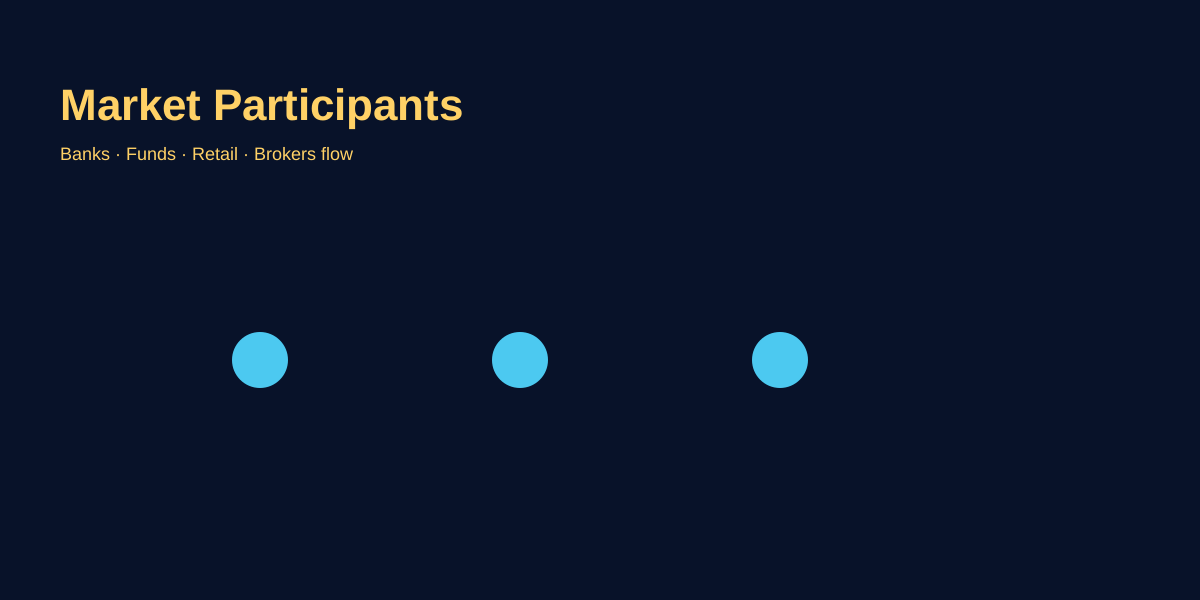
Image explanation: arrows from central banks → institutions → retail; liquidity pools highlighted.
Common Mistakes
- Assuming retail orders move macro trends.
- Not checking execution reports and comparing brokers.
- Overtrading around illiquid hours expecting tight spreads.
Who is Active in Each Session? (Practical Implication)
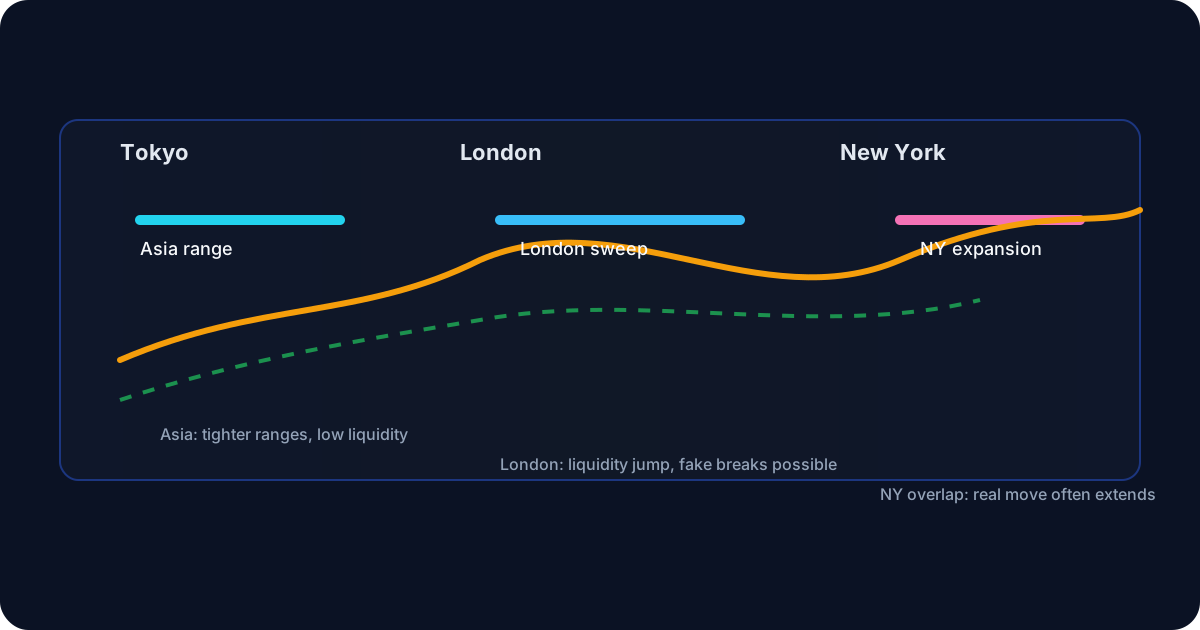
Sessions bring different participant types, which changes liquidity and volatility. London open par European banks aur macro funds dominate; New York open par US banks, option gamma flows, aur commodity players active hote hain. Asia session mein exporters hedging aur central bank reserve tweaks aate hain. Agar aap intraday trade kar rahe ho, session context ko ignore mat karo.
- Tokyo/Asia (22:00-08:00 UTC): Tighter ranges, occasional BOJ-related spikes. Best for: range trades on majors, GOLD scalps with small stops. Spreads: 1-2 pips EUR/USD, wider during low activity.
- London (08:00-17:00 UTC): High liquidity plus news bursts. Spreads compress to 0.5-1 pip EUR/USD, large orders execute cleanly. Best for: trend trades, breakout confirmations.
- New York (13:00-22:00 UTC): Data-heavy (NFP, FOMC, etc.). Overlaps create biggest moves. Commodities like GOLD react sharply to US data. Liquidity best 1-4 hours into open.
Broker Model Impact: ECN vs Market Maker vs STP
Aapka broker execution model aapka fill quality aur cost decide karta hai. ECN par aapka order other participants ke against match hota hai; market makers khud counter-party ban sakte hain; STP mixed routing karta hai. Spread, commission, aur slippage ki expectation model ke hisaab se set karo.
- ECN (Electronic Communication Network): Raw spreads + commission (e.g., $5 per lot). Spreads tight during liquid hours (0.5-1 pip majors), volatile during news (5-10 pips). Best for: experienced traders willing to pay commission for transparency and tight fills during liquid hours.
- Market Maker: Wider spreads (1-2 pips EUR/USD) but simpler cost view, no commission. Broker trades against you, can reduce leverage during news. Check if they honor stops. Best for: beginners, consistent spreads, no surprise commissions.
- STP (Straight-Through Processing) Hybrid: Some orders internal (market maker), some external (liquidity providers). Spreads variable. Monitor execution reports for consistency. If pattern bura lag raha hai, switch broker ya VPS test karo.
Action item: Journal karo har trade ka slippage (fill price vs expected), spread width, aur fill speed. After 25 trades, calculate average cost per trade (commission + spread cost in pips × value). Agar cost 0.3R se zyada ho, broker switch karo.
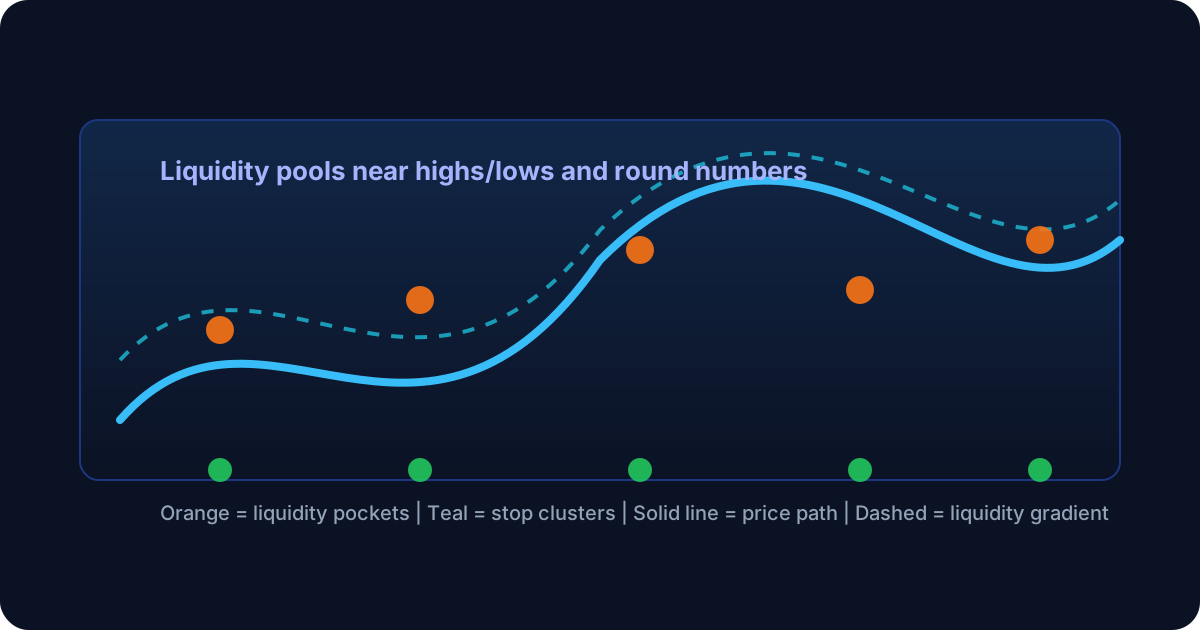
Liquidity Pools: Where Stops Hide & How Institutions Hunt
Institutions know where retail traders place stops — major highs/lows, round numbers (1.1000, 2500.00), psychological levels. They "hunt" these clusters to create quick profits. Smart Money Concepts (SMC) trading is built on understanding these liquidity traps.
Real example (EUR/USD): Price at 1.0980, previous daily high 1.1005. Retail traders place stops above 1.1010 expecting breakout. Institutions push EUR/USD to 1.1015, sweeping those stops (generating panic selling), then reverse down to 1.0950. Retail gets stopped out with loss; institutions took the liquidity and profit.
How to avoid: (1) Place stops 5-10 pips beyond obvious psychological levels, (2) Use support/resistance from lower timeframes (e.g., HTF support for daily, use 15m dips as entry rather than at exact level), (3) Scale stops — enter half position at optimal level, other half at 2R distance to reduce total exposure if hunted.
Intraday Participant Playbook: Reading the Order Flow
Different participants have different strategies and patterns. Understanding these helps you avoid being on the wrong side of large moves:
- Retail traders: News chase + breakout try, tight stops (20-30 pips). Edge: wait for their stop sweep then enter at cleaner levels.
- Hedge funds & macro traders: Position builds over hours/days around macro themes. Size ladders (accumulate gradually). Often scale in/out near session overlaps. They don't panic-sell on small pullbacks.
- Market makers & prop desks: Keep inventory balanced. Spreads widen when one-sided flow hits (more buys than sells). Fade extremes and reversion plays during low-volume periods.
- Central banks: Rare but massive. Intervention moves market 100-300 pips in minutes. Warning signs: unusual calendar events, policy speeches. When they move, stop-losses and retail positions get wiped.
Practical strategy idea: Asia mein range define karo; London open pe range break fake ho sakta hai (stop hunt); wait for stop sweep ke baad real move identify karo. Risk-defined entry lo with 1R loss cap and 2–3R target if structure confirms continuation.
Flow Signals You Can Track (No Expensive Tools Needed)
- Economic calendar + option expiry levels: NY close strike prices kabhi-kabhi intraday magnet ban jate hain. Options gamma can create sharp reversals near key levels.
- Session highs/lows + VWAP (if platform supports): Shows where liquidity is balanced. Break of VWAP with volume = strong conviction move.
- Spread behavior: Sudden widening = liquidity drop (someone large just hit bid/ask). Reduce size or step aside. Spreads compress = new liquidity entering = opportunity.
- Depth proxies (even Level 1 feed): Quote update frequency slow ho to caution. Fast updates = active trading. Slow = participants waiting/thinking.
- Volume analysis (if available): High volume on breakout = real move. Low volume breakout = likely reversal trap.
Risk Controls Aligned to Participant Behavior
- News window: Major economic data se 5–10 minutes pehle position 50% reduce ya flat. Central bank speeches = no positions 30 mins before/after.
- Session switch (London→NY overlap): Size reduce if you are not experienced. Volatility and flows change sharply.
- Slippage budget: Per trade max 0.2% account impact from slippage; agar breach ho raha hai, broker change ya timing adjust karo.
- Position sizing (illiquid hours): (Spread in pips × pip value × lot size) should be ≤ 0.2R. Don't trade large during Asia session if expecting tight stops.
Yeh rules boring lag sakte hain, but survive karne ke liye essential hain. Participants ka behavior aap control nahi kar sakte, risk control kar sakte ho.
Advanced Concept: Funding Rates & Carry Trade Flows
Institutional players often trade "carry trades" — borrowing currency at low rates aur lending at high rates. When funding rates change sharply, these positions unwind suddenly. This creates flash moves unrelated to fundamental news.
Example: If EUR rates suddenly cut while USD stays high, carrying USD becomes cheaper. Institutions may reduce USD longs suddenly. EUR/USD sharp drops even though fundamentals didn't change. Smart traders track central bank rate expectations and funding market shifts to anticipate carry trades unwinding.
Action: Monitor central bank rate differentials via your broker or financial news. When differentials compress, reduce size on high carry pairs (GBP/JPY, AUD/JPY) — unwinding risk is high.
Pro Tips
- Track who is likely to be active in the current session and adapt position size.
- Maintain a journal that records liquidity conditions and slippage for each trade.
Risk Warning
Market participants may act unpredictably. Use risk controls and do not assume past behaviour will always repeat.
SEO FAQs
- 1. Kaun sabse zyada influence karta hai forex prices?
- A: Institutional flows and central bank actions generally have the largest influence.
- 2. Kya retail traders ko market ke liye worry hona chahiye?
- A: Nahi, but understand liquidity and avoid trading large sizes in low-liquidity conditions.
- 3. Broker ka role kya hota hai?
- A: Brokers provide price feeds, handle orders and affect spreads/execution.
- 4. Kya institutions always profit?
- A: No — institutions take risk and also face drawdowns and operational limits.